


Potassium permanganate (KMnO4) was developed for disinfection already in 1857. Since then it has often been used to treat different skin conditions due to its antiseptic properties.
Why and when to use potassium permanganate?
Potassium permanganate solution has antiseptic properties. It helps atopic dermatitis patients with acute secondary skin infections and patients with moderate to severe atopic dermatitis who suffer from chronic infections.
The skin of atopic dermatitis patients is severely affected and the function of the skin barrier weakened. The pH of the skin, central in regulating skin barrier homeostasis and an important inborn defense mechanism, is higher in patients with atopic dermatitis than in healthy individuals. Atopic dermatitis patients also show imbalances in skin microbiota.
Acute secondary skin infections are the result of staphylococcus and/or streptococcus activity, especially Staphylococcus aureus and the group A, beta-hemolytic Streptococcus pyogenes. Such an infection of the upper layer of the skin is called IMPETIGO.
Skin infections can also be chronic. Especially in patients with moderate to severe atopic dermatitis, the skin is colonised by staphylococci, mostly Staphylococcus aureus. The bacterium makes atopic dermatitis worse and causes many inflammatory and allergic reactions. In healthy individuals, Staphylococcus aureus is a regular in the skin’s microbiota, but it makes up a smaller portion. In atopic dermatitis patients, however, it colonises 90 % of the skin which is covered in rashes.
Potassium permanganate is one of the weapons in our arsenal against acute secondary infections and higher numbers of Staphylococcus aureus in severer, chronic cases.
Who can prescribe potassium permanganate treatments?
If you’re planning to use potassium permanganate, consult your pediatrician, GP, dermatologist or pharmacist for application. It can be bought over the counter in drug stores, in powder or tablet form, and can be used externally only.
What to pay attention to when preparing potassium permanganate baths
When starting the bath, it’s good to know that potassium permanganate temporarily colours the skin and the nails brown so you should use gloves when handling the chemical. If you or your child are the ones taking the bath, you can protect the nails by applying vaseline on them.
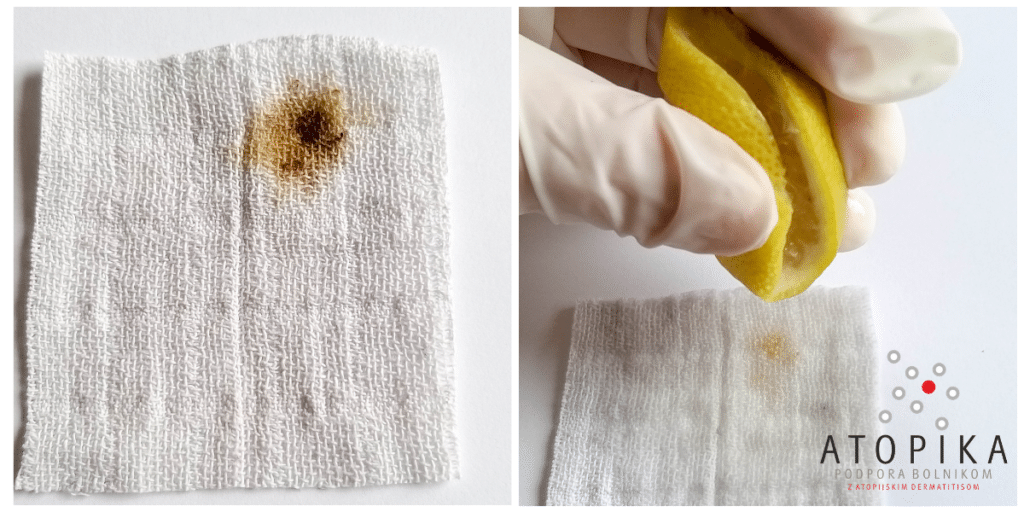
Potassium permanganate can permanently colour clothes and bathtubs. Follow the instructions below in order to avoid inconveniences with your bath. Try removing any stains with lemon juice.
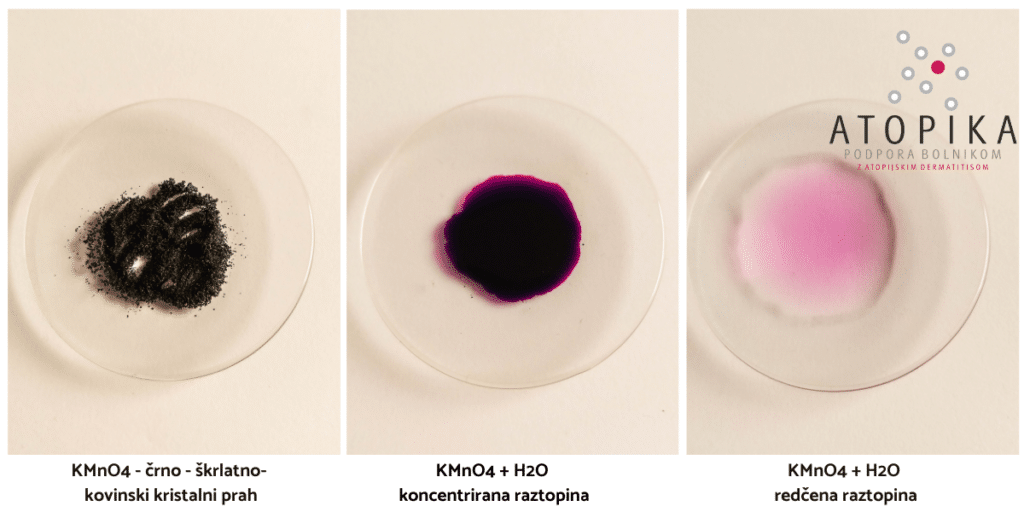
Please, take serious care to dissolve potassium permanganate crystals entirely, otherwise they will not only irritate the skin but might also cause burns.
Potassium permanganate is intended for external use only. In case of ingestion of crystals or concentrated solution, it is necessary to seek medical help.
Preparing the bath
- Dissolve a small portion of potassium permanganate (two pinches or so, depending on the amount of water) in a glass of lukewarm/hot water. Add the solution to the bath until the water in the bathtub turns a gentle shade of pink. If you’re using tablets, follow the instructions on the package. If you are going to weigh potassium permanganate you can try a 0.0005% bath (5 mg in 1 liter of water). However, the final concentration of potassium permanganate must in no case exceed 0.01% (100 mg dissolved in 1 liter of water).
- The solution should be prepared anew for each bath as it will oxidise otherwise.
- Before bathing wash your body or the body of your child.
- The bath should last between 10 and 15 minutes.
- After the bath wash the skin and apply the skincare products that suit you or your child best. The bath can turn the skin dry so timely skincare is essential.
- Clean the bathtub thoroughly when finished. You can use lemon juice.
Unwanted effects of potassium permanganate
Unwanted effects include skin irritation, dryness, reddening or burns (if cystaly weren’t dissolved properly). If your or your child’s skin is sensitive to different substances, I advise you to test the bath on a small portion of your skin on the underside of your wrist.
You can take the bath twice a day for two to three days. If the signs of infection do not improve within 3 to 5 days then consult your doctor.